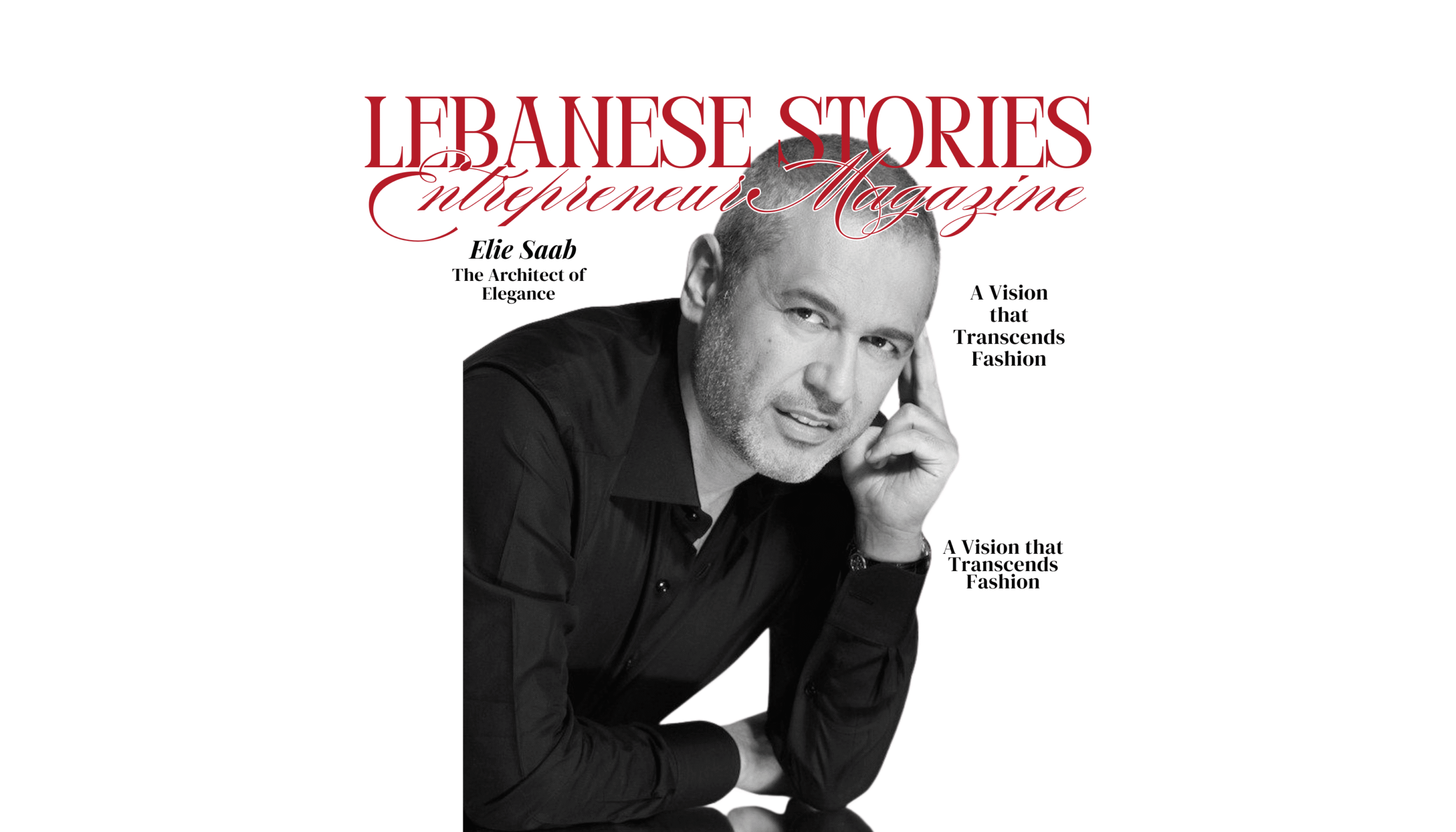
The Lebanese legend who dressed the world in dreams.
In the language of fashion, few names evoke as much reverence as Elie Saab. He is not merely a designer — he is a storyteller, a dream weaver, and a symbol of Lebanese genius shining across the globe.
From a modest childhood in Beirut to the world’s most prestigious red carpets, Elie Saab has spent over four decades crafting more than garments — he has built a legacy of beauty, grace, and national pride.
A Dream Born in Beirut
Elie Saab’s story begins in 1964, in the heart of Lebanon — a land bursting with artistry and contradiction.
Even as a child, he was captivated by the magic of fabric and form. At just nine years old, while other children played in the streets, Elie was cutting patterns for his sisters, turning scraps of material into elegant dresses.
It was not just talent — it was destiny.
At eighteen, he opened his first atelier in Beirut. With no formal training, he relied on instinct, imagination, and an unshakable belief that beauty could transcend hardship. In a city still recovering from war, he offered a different kind of hope — one made of silk, lace, and light.
Word spread quickly. Lebanese women, then Arab royals, soon international clients — all drawn by his signature: femininity, precision, and an unmistakable aura of luxury. By his twenties, Elie Saab had already become Lebanon’s most promising fashion prodigy.
The Lebanese Touch that Conquered the World
In the 1990s, Saab began expanding beyond Lebanon’s borders, staging shows in Rome and Paris. But the true turning point came in 2002, when Halle Berry made history as the first Black woman to win the Oscar for Best Actress — wearing a breathtaking Elie Saab gown.
In that moment, a global audience witnessed not only the triumph of an actress but the emergence of a Lebanese designer who had finally put his country’s craftsmanship on the world map.
Since then, Saab has dressed royalty and celebrities alike — from Queen Rania of Jordan to Angelina Jolie, Beyoncé, and Catherine Zeta-Jones. Each gown tells a story of refinement, craftsmanship, and emotional connection — the kind of artistry that feels alive.
The Art of Elegance
What makes Elie Saab’s creations extraordinary is their soul. His designs are instantly recognizable — flowing silhouettes, intricate embroidery, a palette that mirrors Beirut’s sunsets and Mediterranean light.
Every piece feels timeless, sculpted to celebrate the female form with respect and reverence. Saab once said, “I make clothes that make women feel as if they are shining.” That philosophy lies at the heart of everything he does.
His work is not just fashion — it’s poetry stitched into fabric.
Each gown is a canvas where Lebanese artisanship meets global sophistication. From the delicate beadwork to the flowing tulle, every detail speaks of devotion — to women, to beauty, to heritage.
A Global Brand, A Lebanese Heart
Today, Elie Saab stands as one of the world’s most influential luxury brands — spanning haute couture, ready-to-wear, bridal, perfumes, accessories, and interior design.
His headquarters in Beirut remains the brand’s soul, even as his boutiques in Paris, London, Dubai, and New York represent his international reach.
Through wars, crises, and challenges, Elie Saab has remained unwaveringly loyal to Lebanon. He employs Lebanese artisans, mentors young designers, and supports fashion education. His belief is simple yet profound: “Lebanon is my identity — it will always be at the core of my inspiration.”
When explosions or political turmoil shook the country, Saab’s words and actions carried the calm of a man who believes in rebuilding through beauty. He transformed the world’s perception of Lebanon — from conflict to creativity, from survival to elegance.
A Vision that Transcends Fashion
Beyond the runway, Elie Saab represents something larger — the endurance of Lebanese artistry. His success became a source of collective pride, proving that even in a small nation, greatness can bloom against all odds.
He is not only a designer but a cultural diplomat — bridging East and West through fabric, symbolism, and emotion.
In every show, the Lebanese influence whispers through the details — the hand embroidery inspired by traditional craftsmanship, the gold and ivory hues reminiscent of Beirut’s architecture, the romantic silhouettes that echo Levantine femininity.
His work speaks a universal language: beauty as a form of resilience.
The Legacy of a Lebanese Genius
Elie Saab’s name today stands alongside the greatest in haute couture — yet his story remains deeply human. He often recalls how he started with a needle, determination, and a vision.
He represents not only personal success but the triumph of Lebanese creativity on the world stage.
Through him, Lebanon became synonymous with luxury, artistry, and grace. And through his work, generations of designers found courage to dream — to believe that a Lebanese name could sit beside Dior and Valentino.
Elie Saab is not just a designer.
He is a storyteller who gave Lebanon a voice — one made of beauty, strength, and eternal elegance.
 lebanesestories.com